Kituwa IT · Field guide
Remote access planning checklist
Remote access is a door. Plan who can open it, how, and what happens if the key is lost. Practical checks and official references.
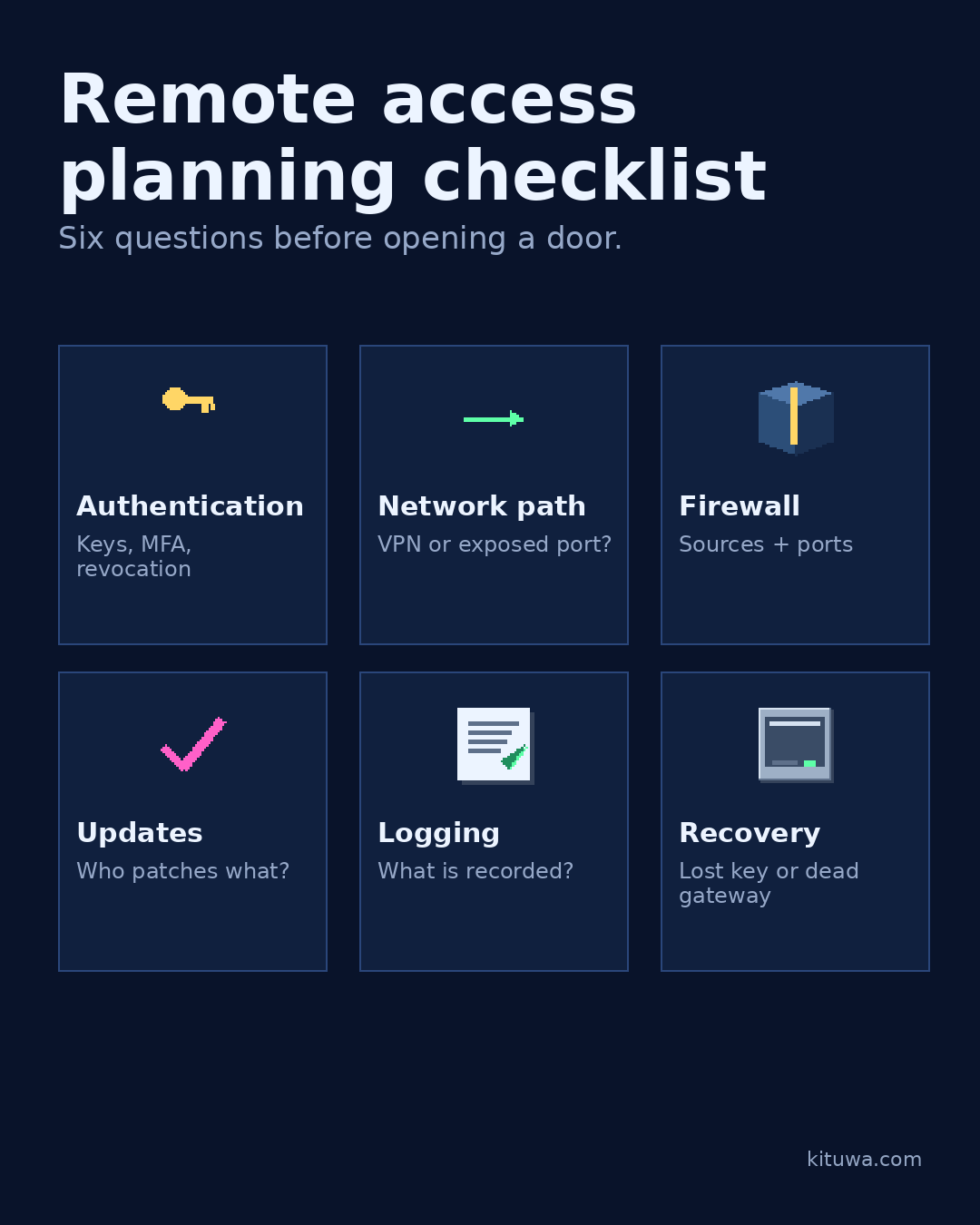
Remote access is a door. Plan who can open it, how, and what happens if the key is lost.
This guide expands the Facebook post into a practical workflow for beginners, home-lab users, and small-business owners who want to understand the trade-offs before changing a working system.
What this guide covers
- Remote access planning checklist
- Six questions before opening a door.
- Authentication — Keys, MFA, revocation
- Network path — VPN or exposed port?
- Firewall — Sources + ports
- Updates — Who patches what?
Why it matters
The goal is not to memorize a product name or copy a command blindly. It is to understand what the change affects, verify it against an official reference, test it on spare hardware or a virtual machine when possible, and keep a rollback path.
A practical walkthrough
Step 1: what to check
Six questions:
Use the supported update path
- Authentication: passwords alone? Keys? MFA? Who can revoke access?
- Network path: VPN, tunnel, or direct port forward? What is exposed?
- Firewall: which source addresses and ports are allowed?
- Updates: who patches the gateway and the service, and how often?
- Logging: what is recorded, where, and for how long?
- Recovery: how do you regain access after a lost key, expired certificate, or broken gateway?
Check the network path
Write down the allowed source, the port, the account, and the rollback step for each rule. Review access when a device or person leaves. Remove what you no longer need. Prefer a private path over exposing a service directly. Test from outside your network, then test recovery. Keep an offline copy of the recovery steps.
Your turn
What is your recovery plan if the gateway dies?
What to verify
- Use the official documentation for the exact version you run.
- Test on a spare device or virtual machine before changing a working system.
- Keep a backup and a rollback path.
- Record what changed and how you verified it.
Common mistakes
- Exposing a service before authentication and updates are ready.
- Changing several network variables at once.
- Forgetting DNS, TTL, firewall, or rollback details.
Quick checklist
- ☐ Six questions before opening a door.
- ☐ Authentication — Keys, MFA, revocation
- ☐ Network path — VPN or exposed port?
- ☐ Firewall — Sources + ports
- ☐ Updates — Who patches what?
- ☐ Logging — What is recorded?
FAQ
What is the first step?
Remote access is a door.
What should I avoid?
Exposing a service before authentication and updates are ready.
Where can I verify the current details?
Use the official references below; versions and interfaces change.
References
Related guides
Need help?
If you want a second opinion on the setup or the rollback plan, Kituwa can review it with you. Start with the checklist above; it makes the conversation more useful.