Kituwa IT · Field guide
Your computer emergency kit
Build a small emergency kit before you need it. A labeled recovery USB, an external backup drive, printed recovery… Practical checks and official references.
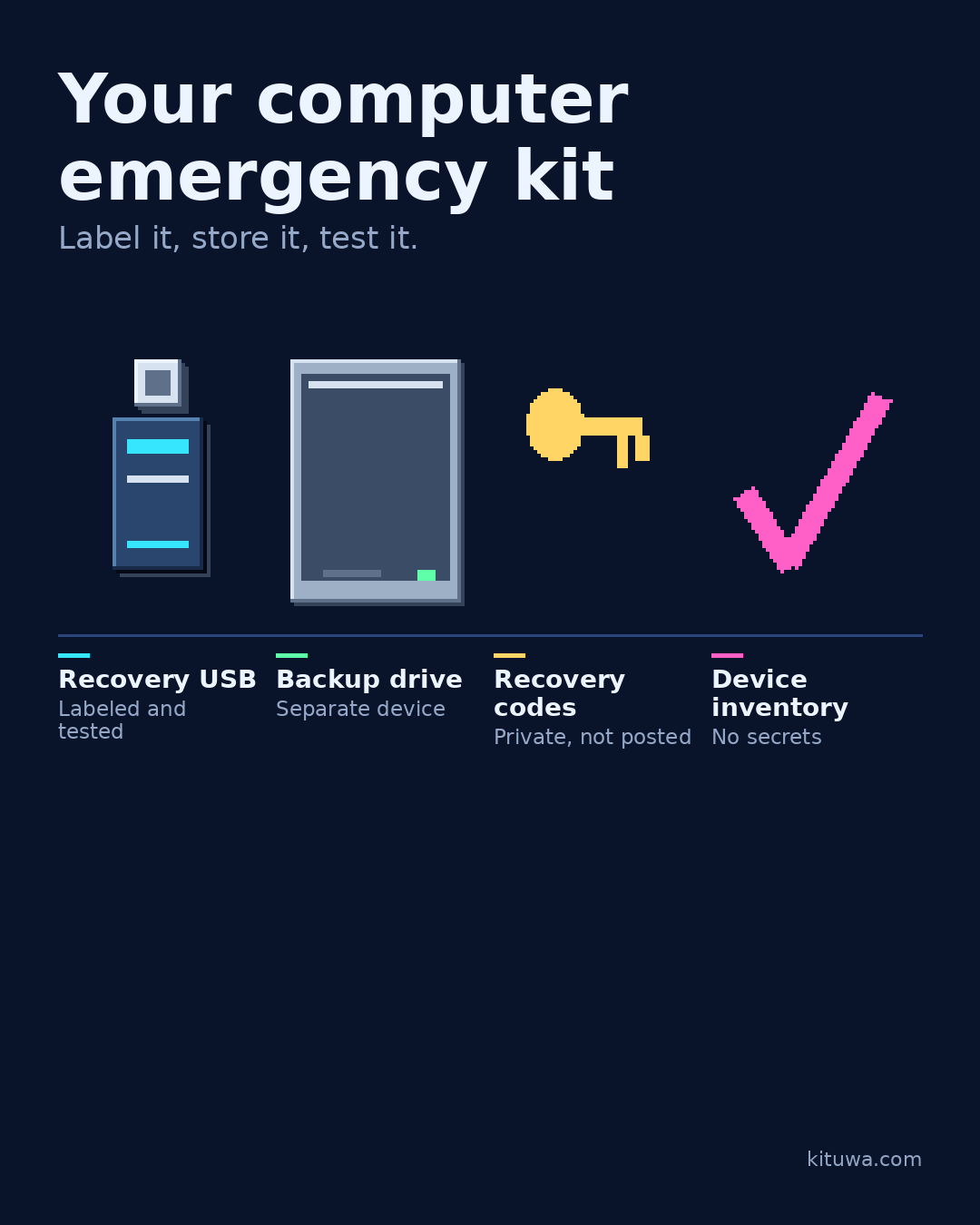
Build a small emergency kit before you need it.
This guide expands the Facebook post into a practical workflow for beginners, home-lab users, and small-business owners who want to understand the trade-offs before changing a working system.
What this guide covers
- Your computer emergency kit
- Label it, store it, test it.
- Recovery USB — Labeled and tested
- Backup drive — Separate device
- Recovery codes — Private, not posted
- Device inventory — No secrets
Why it matters
The goal is not to memorize a product name or copy a command blindly. It is to understand what the change affects, verify it against an official reference, test it on spare hardware or a virtual machine when possible, and keep a rollback path.
A practical walkthrough
Protect the data first
A labeled recovery USB, an external backup drive, printed recovery codes, and a written device inventory. Keep the USB and drive somewhere you can find them; keep the codes somewhere private. Never post recovery codes, passwords, tokens, or serial numbers in comments.
Protect the data first
An inventory can be simple: device name, model, operating system, disk encryption status, backup location, and who to contact. Do not include secrets.
Protect the data first
Test that the USB boots and that the backup opens. A kit you have never used is a box of hope.
Your turn
Which non-sensitive item would you add?
What to verify
- Use the official documentation for the exact version you run.
- Test on a spare device or virtual machine before changing a working system.
- Keep a backup and a rollback path.
- Record what changed and how you verified it.
Common mistakes
- Changing more than one thing at a time.
- Skipping the official documentation for your version.
- Assuming a warning means you should delete or reset data.
- Not recording what you changed or how you verified it.
Quick checklist
- ☐ Label it, store it, test it.
- ☐ Recovery USB — Labeled and tested
- ☐ Backup drive — Separate device
- ☐ Recovery codes — Private, not posted
- ☐ Device inventory — No secrets
FAQ
What is the first step?
Build a small emergency kit before you need it.
What should I avoid?
Changing more than one thing at a time.
Where can I verify the current details?
Use the official references below; versions and interfaces change.
References
Related guides
- Practice recovery before you need it
- An old laptop as a home server
- Plan a server before installing apps
Need help?
If you want a second opinion on the setup or the rollback plan, Kituwa can review it with you. Start with the checklist above; it makes the conversation more useful.